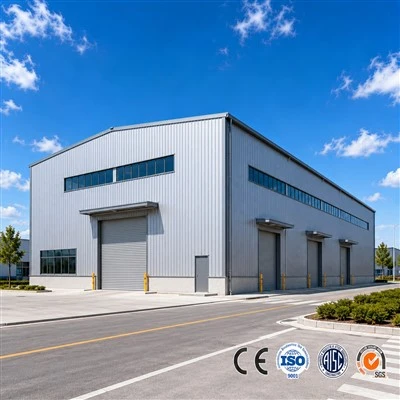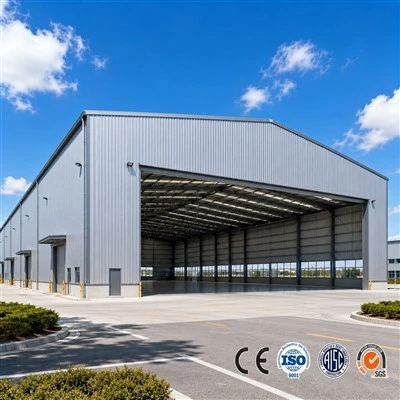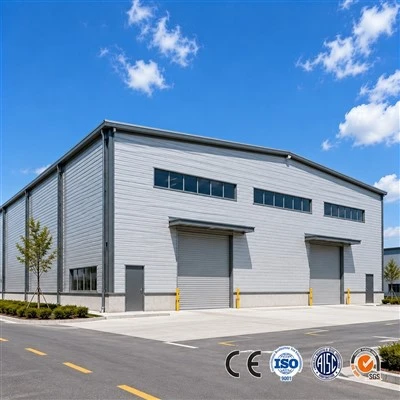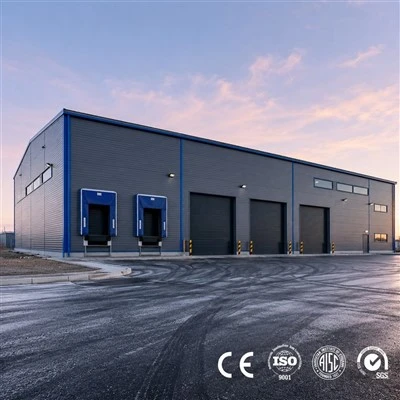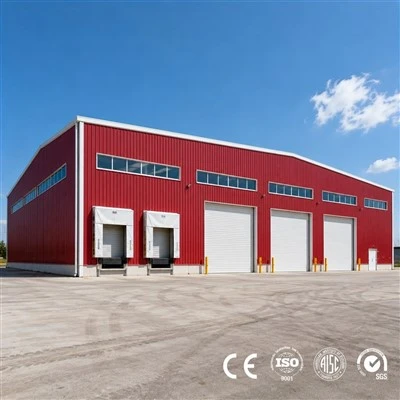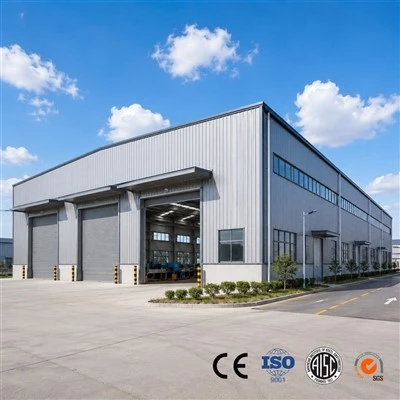


A turnkey hangar, meaning structure, doors, electrical, lighting, insulation, and a finished interior, typically runs $65 to $150 per square foot in 2026. Specialized commercial or maintenance hangars can run higher still.
If you're only pricing the structure itself, a basic steel shell with no interior finish runs $25 to $45 per square foot. That gap between shell and turnkey is exactly why quoted numbers for "an aircraft hangar" can look wildly different depending on what's actually included.
So, how much does a hangar actually cost? We'll break down these factors below.
What Factors Affect Aircraft Hangar Cost?
These are the factors that move the price the most, and each one works through a different mechanism.
Hangar size
A bigger hangar costs more overall, but fixed costs such as moving dirt for the foundation, crane time, and site setup are spread over a larger area as the building size increases. As a result, the aircraft hangar cost per square foot may decrease, but this does not mean that larger hangars are cheaper to build overall.
| Footprint | Shell-only ($/sq ft) | Turnkey ($/sq ft) |
| 1,500–3,500 sq ft | $28–$40 | $65–$95 |
| 6,000–15,000 sq ft | $32–$48 | $90–$130 |
| 30,000+ sq ft | $35–$55 | $110–$180 |
Don't build in extra room "just in case." Matching your hangar size to what you actually need is one of the most direct ways to control cost per square foot.
Hangar type
Hangar type raises or lowers cost independent of square footage, because intended use, not floor area, determines how many systems the building needs. A private storage hangar gets by with minimal fire protection, minimal MEP, and simple permitting.
A commercial or maintenance hangar at the identical footprint needs full fire suppression, extensive electrical and plumbing, and a harder permitting path. The steel frame costs the same either way; everything layered on top of it doesn't.
| Hangar type | Typical use | Main cost driver beyond size |
| Private | Storage for single/twin-engine aircraft | Minimal systems, simplest permitting |
| Corporate | Light jets, some light maintenance | Added MEP and finish level |
| Commercial / maintenance | MRO, FBO operations | Full MEP, fire suppression, complex permitting |
Aircraft doors
Doors raise cost because they're engineered to the opening, not sold off a shelf, and that engineering gets more expensive as door type gets more complex. On a wide-span opening, doors can represent 15% to 25% of total project cost by themselves.
Bifold hangar doors are the baseline option on most steel hangar builds. Hydraulic hangar doors typically run 10% to 20% more than a bifold door of the same width, and sliding hangar doors add another 5% to 15% over bifold pricing depending on span.
Because aircraft hangar door types change the number by this much, treat it as its own line item from the start rather than folding it into a rough per-square-foot estimate.
Structural design and materials
Structural design is what turns your aircraft's dimensions into a price. Wingspan and tail height set the clear-span and clear height the frame has to achieve, and a clear-span frame that holds up a wide roof without interior support columns costs more per pound than a conventional frame with columns.
Moving from a T-hangar built for a single engine general aviation aircraft up to a business jet hangar sized for a twin engine turboprop or light jet typically adds 20% to 30% to shell cost for exactly this reason.
See our guide on aircraft hangar size for how to size a hangar to your aircraft.
Material choice adds another swing on top of that. Steel is a volatile input on its own, with mill prices moving 10% to 20% in a matter of weeks, which is why most steel building quotes are only valid for 7 to 15 days.
Locking in a quote too far ahead of construction risks a budget that ends up over its original estimate, since the price you were quoted may simply not hold by the time you're ready to sign.
Loads and building codes
Design loads raise cost by adding steel tonnage before a single square foot changes hands. Snow load, wind load, and seismic zone requirements each demand a heavier frame, typically adding 5% to 15% to steel tonnage cost depending on the region.
| Region type | Governing load | Typical cost impact |
| Coastal | Wind | +5%–10% |
| Northern / mountain | Snow | +8%–15% |
| Seismic zone | Seismic | +5%–12% |
A hangar in coastal Florida and one in the Rockies, at the same footprint, can carry meaningfully different structural costs for this reason alone.
Site conditions and foundation requirements
Site conditions raise cost before steel is even ordered, because the foundation has to be engineered for the ground it's sitting on. Poor soil bearing capacity can add $5 to $15 per square foot in foundation costs alone, driven by deeper footings or piling.
Grading, drainage, and utility runs vary by site as well, and each shows up as its own line item once a civil engineer scopes the lot.
What Else Affects Airplane Hangar Cost?
These factors don't move the number as much as size, type, doors, or structure, but they still shift where a bid lands.
Labor and logistics costs
Labor and logistics costs move the final bid because regional labor rates and distance from steel fabrication to site both get priced into every line item, not just the frame. Two identical hangars in different states can differ by 10% to 20% in total cost for this reason alone.
This is also why a national average price per square foot figure is a poor starting point; it was never built for your specific site's labor, steel, and code environment.
Permitting and regulatory requirements
Permitting and regulatory approval raise costs by adding time and paperwork before construction can even start, not by adding more steel. Engineering reviews, airport authority approvals, and inspections during construction typically add up to 8% to 15% of the total cost. Complex projects, or your first time building at an airport, tend to land on the higher end of that range.
A longer approval path also extends how long your steel quote has to hold, which matters given how briefly those quotes stay valid in the first place.
Is a Prefab Aircraft Hangar Cheaper Than a Custom Build?
Usually, yes, for standard sizes and shapes. Prefab aircraft hangar cost typically runs lower than custom fabrication because the engineering and tooling are already standardized rather than built from scratch for your project.
That gap narrows for highly custom clear span designs or non standard footprints. Whether you go with a custom aircraft hangar or a standard size, you need a clear idea of what you need and roughly what it'll cost.
How Can You Keep Hangar Costs Under Control?
Separate what you truly need from what's just nice to have early on. Floor reinforcement and doors are hard to add later once the frame is built to fit them, but things like paint, flooring, and lighting can usually be added or upgraded down the line without touching the structure.
Request every quote against the same written spec sheet - footprint, door type, floor rating, and systems included, so the bids you get back are actually comparable instead of three different scopes wearing the same price tag.
Where your aircraft allows it, stick to standard footprint and door widths instead of custom dimensions. Standard sizing is what prefab manufacturers tool for, and it's usually the fastest way to bring a number down without cutting anything you actually need.
FAQ
Is an Airplane Hangar a Good Investment?
Yes, for most aircraft owners. It protects your plane from weather damage, reduces maintenance costs, and can increase resale value.
What Is the Average Cost to Build an Airplane Hangar?
Most airplane hangars cost between $150,000 and $500,000+, depending on size, location, and materials. A basic steel hangar for a single small aircraft starts on the lower end, while larger hangars for multiple aircraft or added features push costs higher.
What's the Cheapest Type of Hangar to Build?
T-hangars, or small box hangars, are the cheapest choice because they use repetitive modules, share walls, and have a simple structure. An individual T-hangar bay is the most economical option for beginners.
Ready to Get a Real Number for Your Airplane Hangar?
To get a real sense of the cost, you have to look at the aircraft size, the site, and the overall scope of the project together. Estimating a rough cost range up front helps you avoid a major budget blowup later.
Share your aircraft type, site location, and intended use, and we'll walk you through where your project lands. As experienced prefab steel building manufacturers, we can help you turn those numbers into a realistic plan.