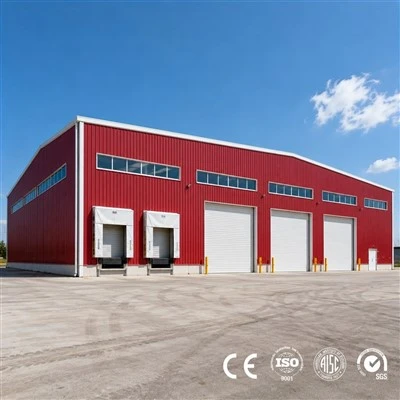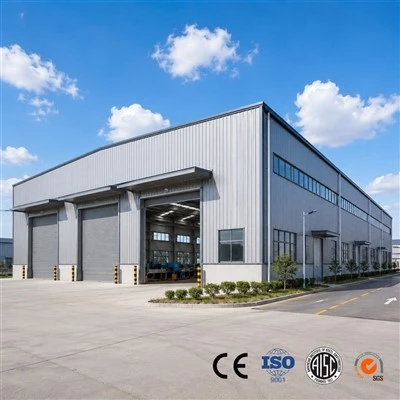

Two steel buildings with the same size can need very different steel. The site usually explains why. A building in a mild inland area sees light snow and moderate wind. The same building in a heavy-snow or hurricane region needs a stronger frame, more bracing and tougher connections.
In snow load steel building design, the loads at your site set how much stronger the frame must be. This guide explains what snow load and wind load are, which parts of a steel building they change, and what they do to steel use and cost.

What are snow load and wind load on a steel building?
A load is a force the building must carry. Snow load is the weight of snow on the roof. Wind load is the pressure wind puts on the walls and roof.
Snow pushes down. Wind does three things at once. It pushes on the windward wall, pulls on the side and back walls, and tries to lift the roof off.
Snow load depends on how much snow falls and how heavy it is. Light, fresh snow weighs far less than wet or packed snow, so depth alone does not tell you the load. Wind load depends on wind speed, building height, roof shape and how open the walls are.
Snow load is measured in kPa (psf in the US). Wind speed is measured in m/s (mph in the US). One psf is about 0.048 kPa, and one mph is about 0.447 m/s.
Both loads come from the site. That is why the same steel building is designed differently in different places.
Why do snow and wind loads matter for steel buildings?
Snow load and wind load decide whether a steel building stays safe and usable in its worst weather. They also set how much steel goes into it.
A large building such as a steel workshop puts a lot of surface in the weather. The roof is large and the walls are tall. Clear spans leave few columns to share the load, so each rafter and column carries more. Big doors let wind inside when they are open.
Steel frames are designed close to the loads they must carry. That keeps the price down, and it leaves a small margin for a wrong input. A steel building designed for mild weather and built in a heavy-snow area looks the same on the drawings. The gap shows up in the first severe storm.
Fixing it after fabrication is expensive, because parts that are already built must be reinforced or replaced.
So the load numbers need to be right from the start, and they come from one place: the project site.
Why does a steel building quote need your project location or ZIP code?
Because the loads come from the site. Design snow loads run from almost nothing in mild climates to several kPa in heavy-snow regions. Design wind speeds run from roughly 100 mph inland to over 180 mph on hurricane coasts.
Two sites in the same state can differ. A ridge top sees stronger wind than a sheltered valley. A site at higher elevation collects more snow than one near the coast.
So we ask for the project address or ZIP code, the distance to the sea, the terrain and the elevation. We also ask which building code your local authority uses, because codes define wind speed in different ways. With those answers, an engineer can pick the right loads before we quote.
How do snow load and wind load affect steel building design?
Heavy snow load: stronger roof framing
Rafters are the sloped beams that form the roof frame. Purlins are the horizontal beams that hold the roof sheets. When the snow load on a steel building goes up, rafters get deeper, and purlins sit closer together.
Snow also piles up unevenly. Wind pushes it against walls and into the step between a tall main bay and a low office roof. Engineers add strength at those spots. Roof pitch matters too. A steeper roof sheds snow more easily, but it costs more to build.
Wind load: bracing, uplift and anchorage
Bracing keeps the frame from racking sideways. Higher wind means more or heavier bracing.
Uplift is the bigger concern on the roof. Roof sheets, purlin clips, fasteners, and anchor bolts must hold the roof down and pass the force into the foundation. Roof edges and corners see the strongest suction, so they get closer purlins and tighter fastener spacing.
Load combinations
Engineers do not check each load alone. They combine the building's own weight with snow, wind, and crane loads in the ways that can happen together. The worst case sets the size of each part.
Which parts of a steel building do snow load and wind load affect?
| Building part | Snow load effect | Wind load effect |
|---|---|---|
| Rafters | Deeper sections | Uplift can reverse the forces in the beam |
| Purlins and roof sheets | Closer spacing, thicker steel | Denser fasteners at edges and corners |
| Columns | Larger sections for vertical load | Larger sections for sideways load |
| Bracing | Small effect | More or heavier bracing |
| Connections | Stronger bolted joints | Uplift-rated clips and joints |
| Anchor bolts and footings | Larger downward reaction | Larger pull-out and overturning forces |
| Large doors | Small effect | Extra framing around openings |
How do doors and cranes affect steel building loads?
Large doors matter most. When a door is open in a storm, wind enters and pressurizes the inside of the building. Under ASCE 7, a building with a large opening uses an internal pressure factor of 0.55, against 0.18 for a fully enclosed one. That is roughly three times higher, and it adds to the uplift on the roof.
A crane, common in a steel workshop, adds vertical and sideways loads to the columns. A crane bay also has higher eaves, which catch more wind. Roof equipment adds weight, and an attached office creates a snow drift beside the main roof.
Tell your supplier about doors, cranes, and attached rooms early. They change the design.
Do higher snow and wind loads use more steel?
Heavier loads need heavier sections, more bracing, closer purlins and stronger connections.
Wind pressure rises with the square of wind speed. A jump from 45 m/s to 60 m/s raises the pressure by about 78%. In high-wind areas, roof framing and connections often change more than the main frame.
How do snow load and wind load affect the cost of a steel building?
More steel means higher material cost, and it also means more fabrication and more freight weight. Bigger reactions at the columns can call for larger footings, which adds foundation cost.
Some savings are safe. A moderate roof pitch, sensible purlin spacing and a good column layout can lower steel use without cutting the design load.
Lowering the design load is not a saving. If two quotations for the same building differ a lot in price, check the loads behind each one first. The cheaper quote may be designed for a milder site than yours.
What are the risks of incorrect design loads?
The risks depend on how far the design falls short. Small gaps can cause roof deflection, leaks or loose roof sheets. Larger gaps can damage connections and framing in a storm. In extreme cases, the roof or frame can collapse.
There are practical risks too. Local authorities can reject drawings that do not match the code loads for the site. Fixing a building after it is built costs far more than fixing the design before fabrication.
Snow load steel building FAQ
What is a heavy snow load for a steel building?
Heavy is relative to the standard load your supplier designs for. As a rough guide, many suppliers treat about 50 psf (2.4 kPa) and above as heavy-snow design, against about 20 psf (1 kPa) for a standard commercial building. Ask your supplier what load their standard design covers and what needs upgrading.
How much snow load can a steel building roof hold?
It depends on the design. The roof is built for the snow load of your site, so the number can range from under 1 kPa to several kPa. Ask your supplier to state it in the quotation.
Can a steel building resist typhoon or hurricane winds?
It can, when it is designed for your site's wind speed and built with the right connections, bracing and door details. The design covers the wind your code expects, and extreme events beyond code are still possible.
Does a crane change the wind and snow design?
Yes. A crane adds its own loads to the columns, and its higher eaves catch more wind. The engineer checks all of them together.
Which matters more for a steel building, snow load or wind load?
It depends on the site. Heavy-snow regions are often governed by snow, and coastal regions by wind. Many sites need both checked, and the worst combination sets the size of each part.
Get the right snow load for your steel building
Snow load and wind load come from your site, and in a steel building they change the frame, the steel weight, and the cost. That is why CNSS asks for your project location first.
Send us your address or ZIP code, the building size, and any crane or door details. Our engineers will tell you the loads we design to and state them in your quotation.