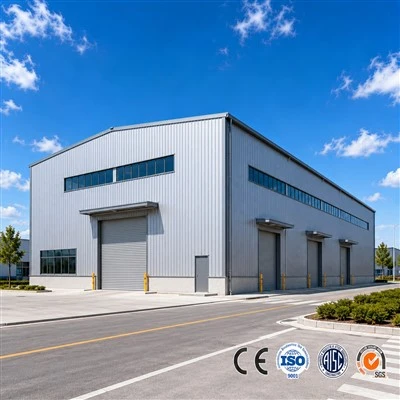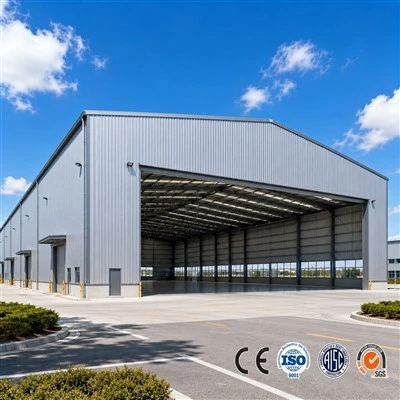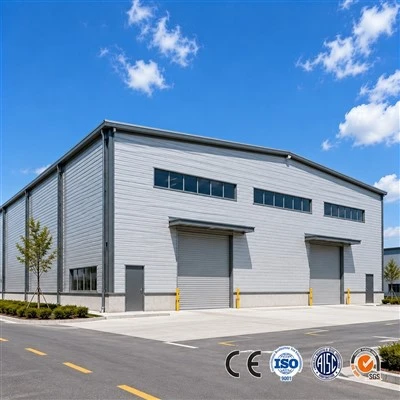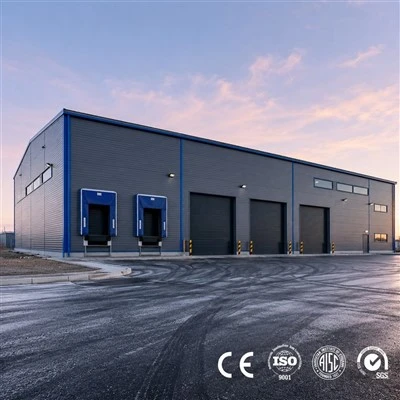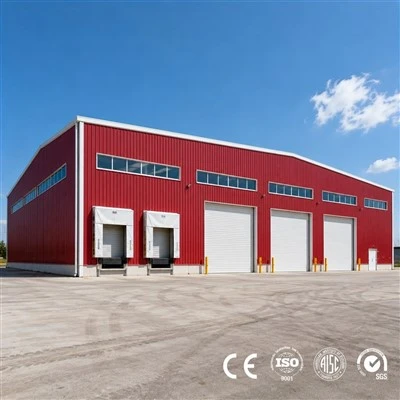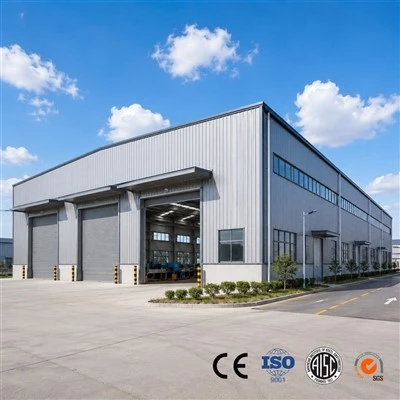

A hangar is a large-span, single-story building used for aircraft maintenance. It typically employs a steel structure or spatial structure system as the roof load-bearing component, with the structural form varying depending on maintenance needs and scale.
Xiamen Taikoo Xiang'an Airport's Hangar No. 1 is 525.1 meters long and 73.85 meters wide, with a steel roof truss weighing 11,393 tons. The maximum single span of the hangar entrance truss reaches 269.5 meters. Beijing Daxing International Airport's China Southern Airlines hangar has a span of 405 meters, capable of accommodating 12 aircraft for maintenance simultaneously, with a hall area of approximately 39,000 square meters. Dunhuang Airport's general aviation support base hangar has a maximum steel truss span of 105.8 meters, using approximately 830 tons of steel; the MRO hangar spans 182 meters and has a depth of 99 meters. The China Southern Airlines Urumqi base hangar (located at Tianshan International Airport), currently under construction, has a planned building area of 65,991.08 square meters. This hangar is the largest single civil aviation hangar in Northwest China, spanning 90 meters plus 130 meters. It can simultaneously accommodate one wide-body aircraft and five narrow-body aircraft. Once operational, it will be integrated with the existing five-bay maintenance hangar at China Southern Airlines' old terminal in Urumqi. Its planned functions include aircraft maintenance for the international market.
To meet diverse maintenance needs, the hangar typically includes suspended docks (such as nose dock, fuselage dock, and tail dock) and ground docks.