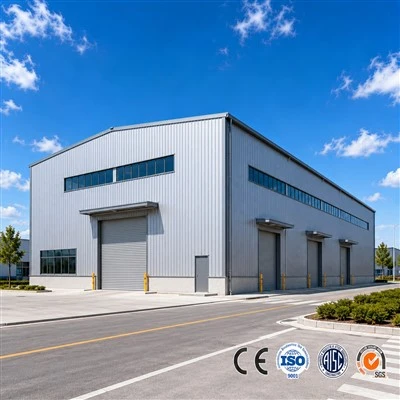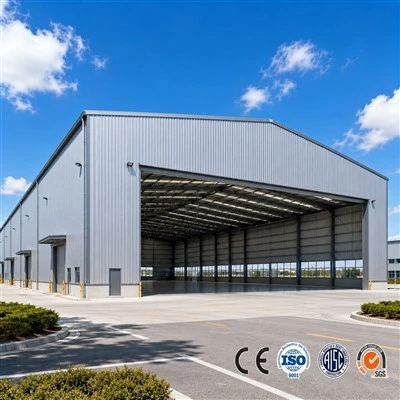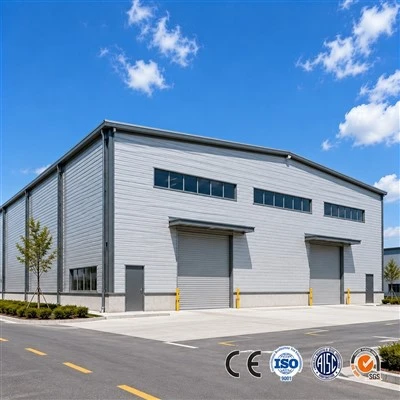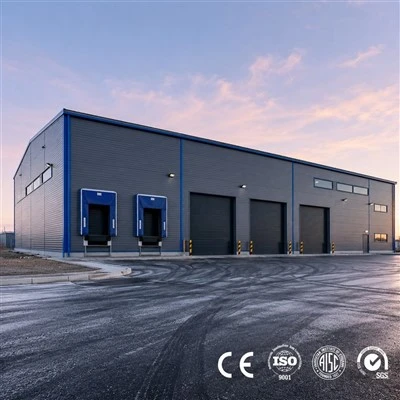

For most permanent aircraft hangars, steel is the most practical structural material. It provides long clear spans, supports large hangar doors, and holds up well with the right coating system. But steel is not automatically the best choice for every project.
Fabric suits temporary or movable structures. Wood suits smaller private airplane hangars. Builders often use concrete for foundations, floors, and hybrid structures. The best material depends on aircraft size, door design, climate, and how long the building needs to serve its purpose.
Key Materials Used in Aircraft Hangar Construction
A hangar's material list starts with one question: how wide does the opening need to be with nothing standing in the way? That single number narrows the field faster than budget or climate. It also explains why the same four materials keep showing up on nearly every aircraft hangar project.
Steel: The Best Choice for Most Permanent Airplane Hangars
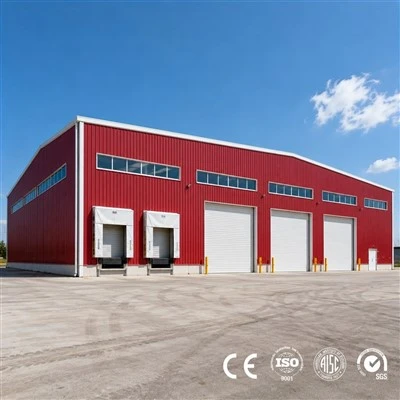
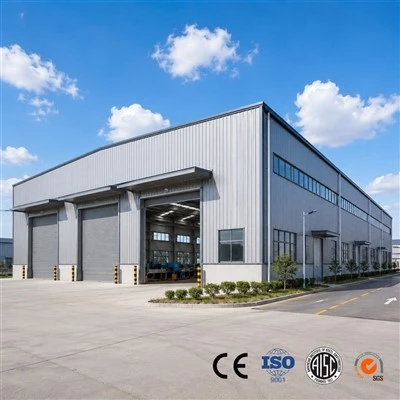
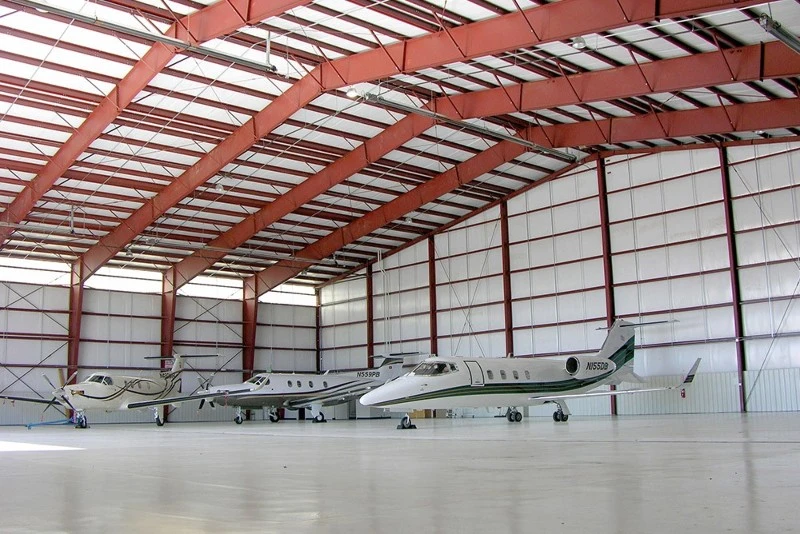
A rigid steel frame uses H-beams or welded box sections tied together with C- or Z-purlins. This frame allows a wide bi-fold or hydraulic door to open onto a column-free bay.
Bay spacing typically runs 20 to 25 feet. The exact spacing depends on the site's wind and snow loads. These systems ship as bolt-together kits rather than raw stock cut on site. As a result, a steel airplane hangar shell can go up faster than a comparable concrete or timber structure.
Concrete: Foundations, Floors, and Limited Superstructures
Every aircraft hangar needs a concrete foundation and slab, regardless of the frame material above it. Reinforced slabs carry the aircraft's nose and main gear loads. They also hold the fuel drainage trenches and containment berms cast directly into them.
Concrete is essential in many hangars, but it's usually not the primary material for the wide-span superstructure itself. It works well for fixed infrastructure above grade, such as a maintenance pit or an attached terminal building. Long spans, however, call for interior columns or a paired steel roof.
Timber: A Fit for Smaller Private Hangars
Wood and timber suit smaller, private aircraft hangars where appearance matters as much as function. Glue-laminated beams can span a private hangar's bay. This can work for single-engine and light twin-engine aircraft.
Owners do take on more maintenance than with a steel frame, especially in humid or coastal climates. Timber isn't a practical choice for large commercial hangars. Span and fire requirements generally favor steel for these applications.
Fabric and Tension Membrane Structures
Speed is the main advantage of fabric structures. A tension structure uses a steel or aluminum frame with a PVC-coated polyester or PTFE-coated fiberglass membrane.
These structures can go up quickly. This makes them useful for military deployments, seasonal use, and other projects where construction speed matters.
The main tradeoff is the membrane. It is UV-stabilized, but it usually has a shorter service life than the frame underneath. It may need replacement before the main frame does.
Steel and fabric serve different project needs. Steel offers greater durability and security. Fabric offers faster erection and a lower initial cost.
Material Comparison at a Glance
| Material | Clear-Span Potential | Durability | Maintenance | Construction Speed | Best Fit |
|---|---|---|---|---|---|
| Steel | Excellent | High | Low-Moderate | Fast | Permanent hangars |
| Concrete | Limited-moderate as a full structure | High | Low-Moderate | Slower | Foundations, floors, hybrid buildings |
| Timber | Moderate | Moderate | Moderate-High | Moderate | Smaller private hangars |
| Fabric | High | Moderate | Moderate | Very fast | Temporary or movable hangars |
These are general reference ranges, not design limits. Aircraft dimensions, door requirements, site loads, local codes, and structural engineering determine the final span and frame dimensions.
What Makes a Material Suitable for an Aircraft Hangar?
Different hangar projects call for different materials. Five factors vary from site to site.
Clear span matters because aircraft need open floor space. Door size also affects the structural frame, especially with large bifold or hydraulic doors.
Climate is another factor. Snow, wind, humidity, and temperature can affect each material differently.
Fire requirements also matter because aircraft hangars must meet specific fire-protection rules. Service life matters too. A permanent hangar needs a different material approach from a temporary structure.
Door height and wingspan set the minimum clear span. Larger aircraft usually need a wider opening. Bifold and hydraulic doors can also increase the structural demands on the frame.
For these projects, steel is often a practical choice. Timber and masonry reach their practical span limits sooner than steel.
Coastal salt exposure, heavy snow, high wind, and local fire codes can also affect material selection. Fire requirements depend on the full building design, not just the frame material.
Total cost of ownership matters too, not just the upfront price. It can shift the calculus toward a material that costs more upfront but less over time. The aircraft hangar cost breakdown covers how that plays out across frame, foundation, and door choices.
Why Steel Works Well for Permanent Aircraft Hangars
Steel is usually the most practical structural material for permanent aircraft hangars for four connected reasons.
First, its frame can clear-span farther than concrete or timber. This keeps the floor open for aircraft movement and multiple parking positions.
Second, the same frame can handle the added point loads from large bifold or hydraulic doors. This is one reason bigger aircraft often push projects toward steel.
Third, properly coated steel resists corrosion, decay, and pests better than untreated wood. It also avoids the added fire load associated with timber.
Finally, pre-engineered steel systems ship as bolt-together kits. This allows a shell to go up faster than a comparable concrete or timber structure.
Beam depth and spacing, more than the steel grade itself, determine how far an H-beam frame can clear-span.
Where Steel Falls Short
Steel isn't the right answer in every case. It conducts heat and cold more readily than concrete or timber. Hangars in extreme climates therefore need proper insulation to prevent condensation on aircraft surfaces.
A poorly specified coating system also leaves steel more vulnerable to direct saltwater exposure. Custom designs that call for exposed wood aesthetics can also be harder to achieve in a steel-only structure.
What Materials Make Up an Aircraft Hangar?
No single material builds a hangar. The structural frame is only the starting point of a full material system:
- Primary structure: steel frame (H-beams or welded box columns)
- Secondary structure: C- or Z-purlins and girts
- Roof and wall cladding: coated steel panels or insulated sandwich panels
- Insulation: sandwich panels or fiberglass batt systems
- Foundation and floor: reinforced concrete slab
- Corrosion protection: galvanizing or a coating system matched to the site
Cladding and Roof Panel Choices
Roof and wall panels handle the weather once the frame is up. Single-skin panels cost less and suit a shell without heating or cooling. Insulated or double-skin panels can reduce interior condensation.
Galvalume and color-coated steel panels help resist corrosion. They also handle wind and hail exposure well when properly specified for the site.
A standing-seam roof uses fasteners hidden under the seam. This design sheds water more reliably over time than exposed-fastener panels.
Insulation and Condensation Control
Insulation is as much about condensation as it is about energy use. Warm, humid air can meet a cold metal roof and create condensation, even without full climate control. That moisture can then drip onto aircraft and tools below.
Insulated sandwich panels and fiberglass batt systems are the two common options. The right choice depends on the target R-value and the budget.
Corrosion Protection for Coastal and Humid Sites
A steel frame's long-term performance depends heavily on its coating system, not just the base material.
Hot-dip galvanizing and Galvalume are common corrosion-protection options. The coating system should also match the site's exposure conditions.
Fasteners and connection points tend to corrode before the main structural members do. Upgrading those details first can extend the building's life more than upgrading the panels alone.
Material selection alone doesn't determine durability. The coating system and site exposure matter just as much.
How Material Choice Affects Hangar Cost
Material choice affects two different numbers: what you pay to build and what you pay to maintain over the building's life.
Steel often costs more to erect than a fabric structure but less to maintain over decades. The reverse is often true early on for less durable materials. Exact figures vary by size and region.
Aircraft hangar costs typically break down into the frame, foundation, doors, and site work, roughly in that order of expense.
The required fire protection group depends on the hangar's design, size, use, construction, and the local code edition.
Material alone does not determine the final NFPA 409 group. The local authority should confirm the applicable group instead of relying on a general table.
FAQ
What is the best material for an aircraft hangar?
For most permanent hangars, steel is the best material. It clear-spans farther than concrete or timber, supports large doors, and holds up with less maintenance over time. Fabric, wood, and concrete each fit specific situations better, covered above.
Is steel better than fabric for an aircraft hangar?
For a permanent, insured structure, steel offers greater durability, security, and service life. Fabric can be faster to erect and can have a lower upfront cost. It can suit temporary or movable hangars.
Is concrete suitable for aircraft hangars?
Yes, but usually as the foundation and floor rather than the full superstructure. Concrete also works well for fixed infrastructure like a maintenance pit or an attached office building.
Do aircraft hangars need insulation?
Even an unheated hangar benefits from insulation. Warm, humid air meeting a cold metal roof can cause condensation on aircraft surfaces. Heated or cooled hangars need insulation for basic comfort and equipment protection too.
What materials go into aircraft hangar roofs and walls?
Builders most often choose coated steel panels, in single-skin or insulated double-skin configurations. The choice depends on whether the hangar has climate control. Standing-seam roofing with concealed fasteners is common for better long-term water resistance.
How do you protect a steel hangar from corrosion?
Hot-dip galvanizing or a Galvalume base is the standard approach, paired with a coating system matched to the site's exposure. Fasteners and connection points corrode before the main structural members do, so those details deserve attention first.
Conclusion
Picking a hangar material comes down to matching the frame to the aircraft, not the other way around. Steel covers the widest range of projects because it flexes with door size, climate, and fleet size without hitting a structural ceiling.
Where a project sits outside that range, whether it's a small private hangar, a temporary deployment, or a foundation under a mixed structure, one of the other three materials usually fits better than forcing steel into a role it wasn't built for.